
NovaLiftGarage Doors (954) 758-9013
Garage door repair

Garage Door Repair

Garage door repair starts with working out what the door is actually doing. NovaLift Garage Doors repairs doors that won't open, won't close, stick halfway, hang crooked or make noise, for homeowners in Hollywood and across South Florida.

Door acting strange? Stop using it until you know why. Don't force a stuck door by hand, and leave springs, cables and bottom brackets alone because they hold a lot of tension.

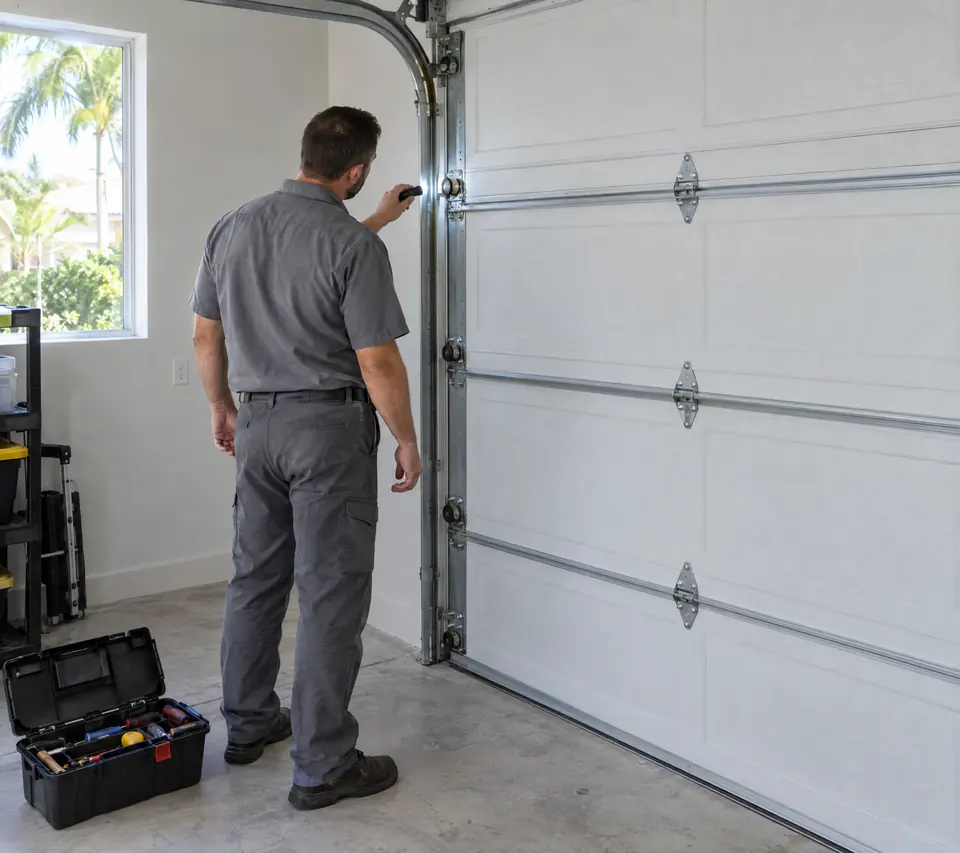
Technician shining a flashlight on the rollers and track of a closed white garage door, toolbox on the floor
Rollers, hinges and hardware

Small moving parts cause a lot of garage door trouble

A sectional door rides on rollers that sit inside a metal track on each side. Hinges join the panels so the door can bend around the curve near the ceiling. When rollers wear, crack or lose their bearings, the door can bind, shake or grind. Loose hinges and bolts let panels shift, which adds rattling and pulls the door out of line.

Track alignment matters as well. If a track works loose from the wall or drifts slightly out of line, the rollers rub and the door moves unevenly. A door that has already jumped out, or a track that is badly bent, is a separate job covered under off-track repair.

Where the noise comes from

Rollers or hinges? Telling the parts apart

Rollers

Rollers are the small wheels on short stems that run inside the track. Steel rollers tend to be louder, while nylon rollers with sealed bearings usually run quieter.

A worn roller may wobble, look flat on one side or have a cracked wheel. You often hear it as a grinding or clicking that travels up the track with the door.

Where
Inside each side track
Job
Guide the door up and down
Worn sign
Grinding, wobble, cracked wheel

Hinges

Hinges connect each panel to the next and hold the roller stems along the edges. They flex every time the door moves.

A cracked or loose hinge often shows up as a popping sound, a gap between panels, or one panel sitting out of line with the rest.

Where
Between the door panels
Job
Let the door bend at the curve
Worn sign
Popping, gaps, loose bolts
Which repair fits

Matching the symptom to the right repair

Many garage door problems look alike from the driveway. These are the ones that usually point somewhere specific.

  1. The door reverses before it closes

    This is often the safety sensors near the floor. A dirty lens or a bumped bracket can stop the door, so see opener and sensor repair.

  2. The door is heavy or won't lift

    A door that feels like dead weight often has a broken spring. The opener can't make up for it.

  3. The door hangs crooked

    One low side usually points to a lift cable that has slipped, frayed or snapped. That falls under cable repair.

  4. Rollers have left the track

    If the door has jumped its rails, stop using it and keep clear. The door is out of balance and can shift.

Repair questions

Garage door repair FAQs

Why is my garage door so loud?

Worn rollers, dry hinges and loose hardware are the usual sources. A sudden new sound, like a bang or a scrape, is worth having looked at before the door gets much more use.

Can I lubricate the door myself?

Many door makers suggest a garage door lubricant on hinges and roller bearings, but not grease inside the tracks. Leave springs, cables and bottom brackets alone.

My door stops halfway. What does that mean?

It can be a binding roller, a track out of line, an opener travel setting or a spring problem. Noticing where it stops and whether it stays level helps narrow it down.

Tell us what your door is doing

Call and describe the sound, the movement or where the door stops. You can also email [email protected].

Call (954) 758-9013