
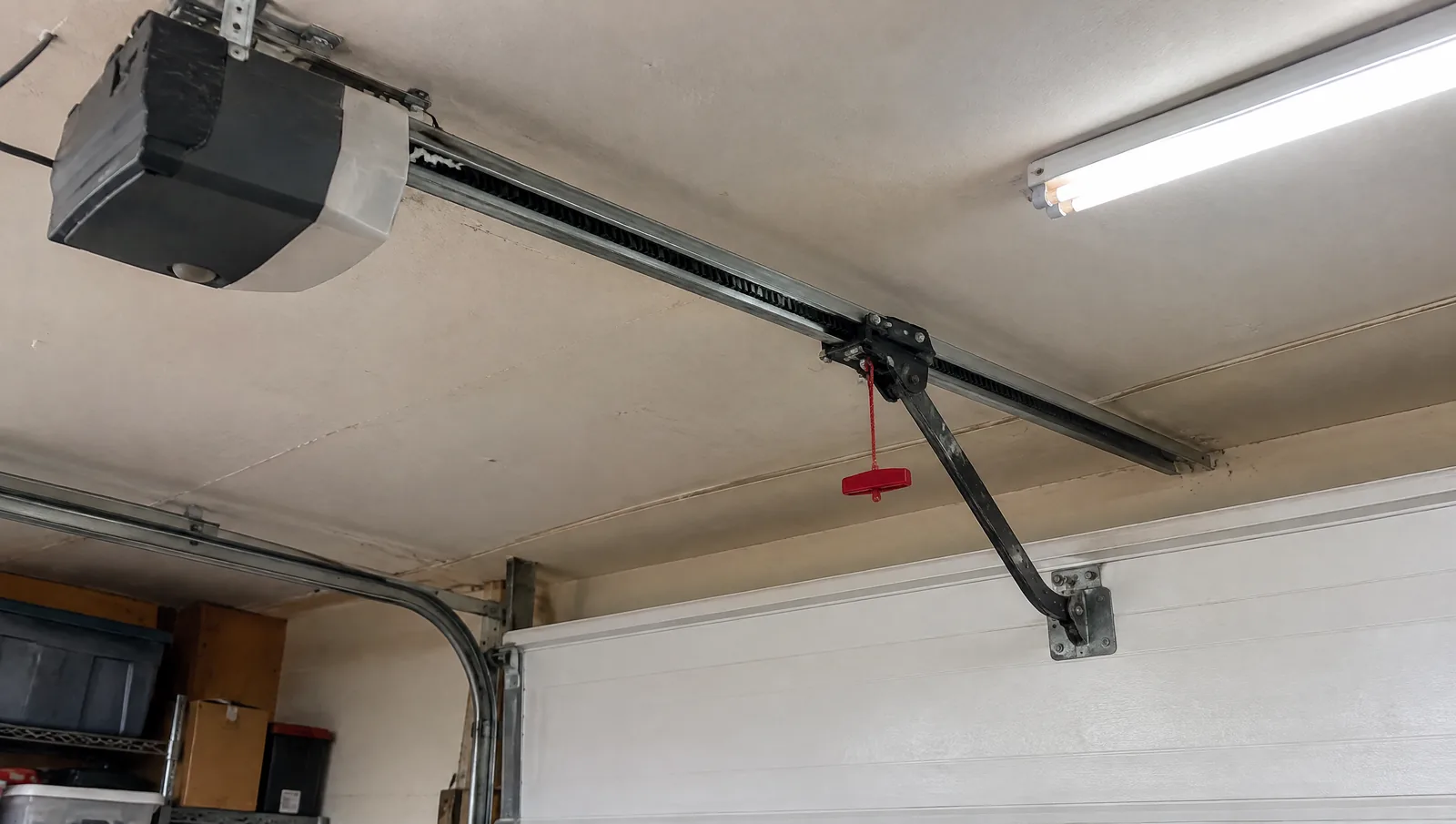
Most homeowners only think about their opener when it stops working. At that point the question is usually whether to fix the one on the ceiling or put up something new. Knowing how the common drive types work makes that decision a lot easier, and it helps you judge whether a suggested replacement actually suits the way you use your garage.
Chain drive
A chain drive uses a steel chain, much like a bicycle chain, running around a sprocket on the motor and pulling the trolley along the rail. It has been the standard design for decades because it is simple and strong.
- Strengths: handles heavy doors well, parts are widely available and the design is easy to service.
- Drawbacks: it is the loudest type, with a rattle and clank you can hear through walls. The chain also needs occasional tension adjustment and a light coat of lubricant.
A chain drive suits a detached garage, or one with no bedroom or living space next to it.
Belt drive
A belt drive works the same way, but swaps the chain for a reinforced rubber belt. The result is a much quieter, smoother opener with less vibration.
- Strengths: quiet operation, little vibration passed into the ceiling and almost no lubrication needed.
- Drawbacks: the belt can stretch or wear over time, and replacement belts are specific to the model.
Belt drives make the most sense where the garage shares a wall with the house, or where someone sleeps in a room above it.
Screw drive
A screw drive turns a long threaded steel rod. The trolley rides along the threads as the rod spins, pushing or pulling the door with no chain or belt at all.
- Strengths: few moving parts and fairly quick travel.
- Drawbacks: the rod needs the right grease to stay quiet, and the design tends to be noisier than a belt. Big swings in temperature can also make the threads work harder.
Wall-mount, or jackshaft, openers
A wall-mount opener sits beside the door and turns the torsion spring shaft directly. There is no rail across the ceiling. That frees up overhead space for storage or a tall vehicle, and it works well where the ceiling is low or sloped. It only fits doors with a torsion spring system, though, and it usually costs more to install than a rail opener.
Features that matter more than the drive
Two openers with the same drive can still be very different machines. When comparing, look at:
- Motor type. DC motors start and stop softly, which is easier on the door. Older AC units tend to jolt at each end of travel.
- Battery backup. Some openers can run the door several times during an outage. We cover how these work in opener battery backup for hurricane season.
- Safety sensors. Photo-eye sensors near the floor reverse the door if something crosses the beam. An opener without them should be replaced, not repaired.
- Rolling-code remotes. These change the signal each time, which makes a stolen code far less useful.
- Lifting capacity. A wide double door or an insulated steel door needs an opener rated for its weight.
Repair or replace?
Plenty of opener problems are worth fixing. A stripped drive gear, a worn sprocket, a failed logic board, misaligned sensors or a faulty wall button can usually be dealt with without replacing the whole unit. The garage door opener repair page goes through those faults and how they are diagnosed.
Replacement starts to make more sense when:
- the opener has no photo-eye safety sensors or doesn't reverse reliably
- parts for the model are no longer made
- the same opener has needed several repairs in a short time
- the noise is a real problem for the people living next to the garage
- you want features the old unit can't offer, such as battery backup
One check comes before any of this. An opener is not meant to lift the door's full weight. If the springs are weak or the door is out of balance, a new opener will strain and wear out just like the old one did. A good assessment looks at the door first.
Fitting the opener to the home
Lauderhill is a good example of why the drive choice depends on the house. A large share of the city's housing sits in condominium communities, and much of it was built in the 1970s. Single-family homes and townhouses of that age can still have an older AC chain drive on the ceiling. Where a garage backs onto a bedroom or a shared wall, a belt drive is usually the kinder choice for the people on the other side. Long, hot summers and storm-season power cuts also make battery backup worth asking about. The garage door repair in Lauderhill page lists the services NovaLift Garage Doors offers in the city.
Not sure whether your opener is worth saving? Call (954) 758-9013 and describe what it is doing.