General repair for older doors
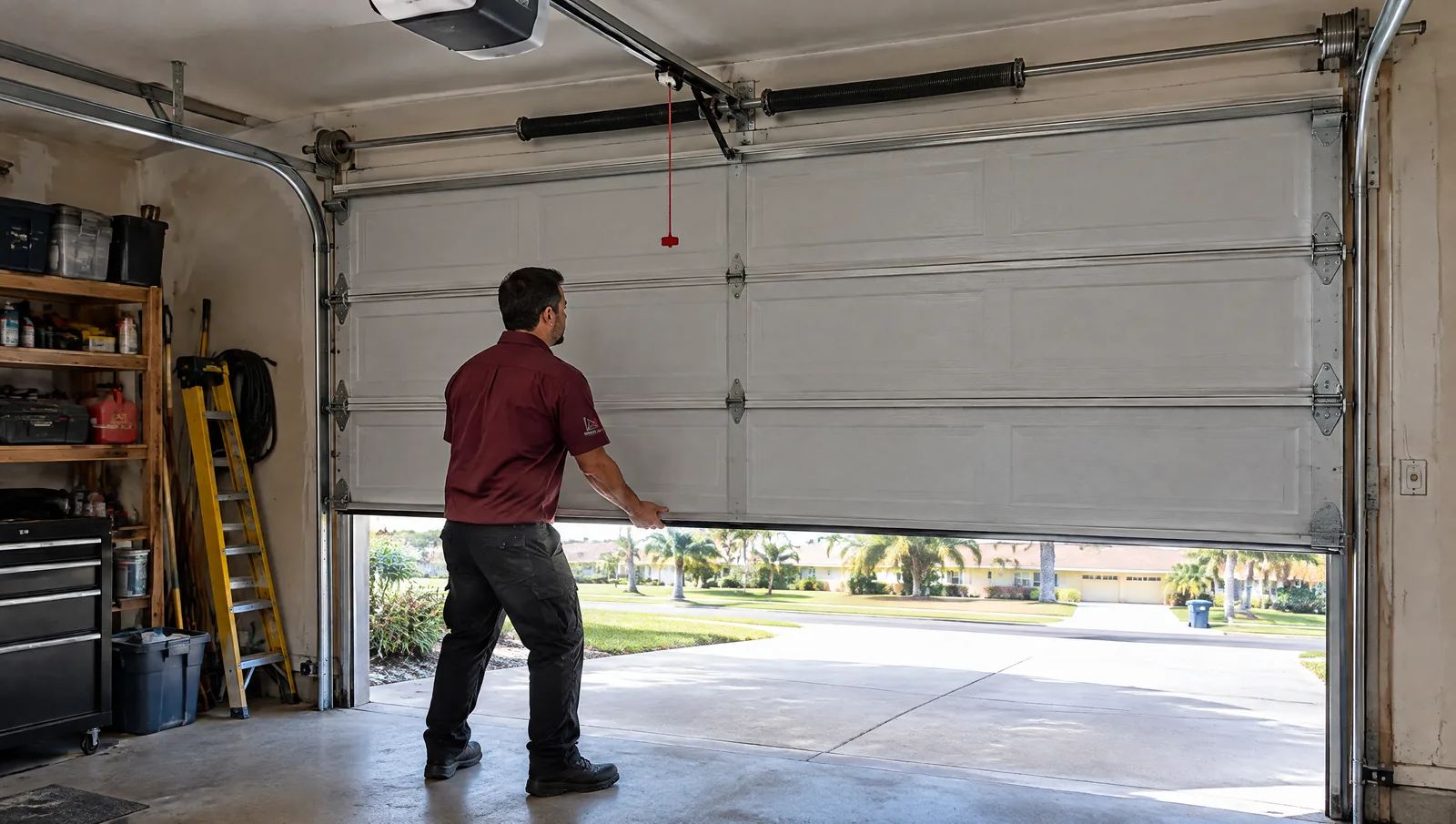
Fort Lauderdale's housing is older than much of Broward, and the doors on those houses show it. Corroded hinges seize, rollers grind on rusty bearings and fasteners loosen in salt-softened metal. The result is a door that jerks, squeals or stops partway. Swapping corroded rollers and hinges, cleaning and adjusting the tracks and tightening every mount usually restores a smooth run and takes strain off the opener.
Garage door repair
Rusted and snapped springs
Salt air speeds up rust on torsion springs, and a rusty coil rubs against itself, wears faster and breaks with very little warning. Near the beaches and canals of Fort Lauderdale, an orange crust on the spring is a sign it is running out of life. When it goes, the door becomes too heavy to lift safely. Keep it shut and have the spring, and its partner on two-spring doors, replaced.
Spring repair
Opener repair in damp garages
Humid, salty air gets into opener housings, corrodes terminals and makes safety sensors flicker. In Fort Lauderdale garages close to the water, a door that reverses just before touching down is often a sensor or wiring fault rather than a dying motor. Remotes that work only up close, a light that blinks and a motor that hums without moving the door are the other usual signs. Each is checked before parts are suggested.
Opener repair
Corroded cable replacement
Lift cables are thin steel strands, and on the coast they corrode from the bottom bracket upward. A Fort Lauderdale door with a cable that is brown, stiff or missing strands is close to letting one side drop. When a cable snaps, the door tilts and often binds in the track. Both cables are replaced together, and the drums and bottom brackets are checked for rust while the door is apart.
Cable repair
Resetting doors off their tracks
Seized rollers, a broken cable or a hard gust against a closed door can push it out of its tracks. On older Fort Lauderdale houses, track brackets anchored into aging framing can also work loose over time. A door hanging at an angle can fall, so unplug the opener, keep children and pets away and wait for the door to be set back in place and the tracks straightened.
Off-track repair
Replacing doors on older coastal homes
The median Fort Lauderdale home was built in 1973, so a good number of the detached houses and townhomes here still have early garage doors or ones replaced long ago. Near the beaches and canals, salt in the air rusts the bottom section and hardware first, and a door can reach the point where repairs only buy time. A replacement in Broward County typically needs a building permit, a Florida or Miami-Dade product approval number, and a wind-load rating that matches the opening. The opening itself is measured and checked before a door is ordered.
Garage door installation
Rollers near the canals and the beach
Chloride from sea air is hard on metal, and in canal-side and beach-area Fort Lauderdale garages the roller bearings are among the first parts to suffer. A rusted roller stops spinning and slides along the track, so the door jerks, grinds and pulls at its hinges. Sealed nylon rollers hold up better in that air than open steel ones. New rollers are fitted across the whole door, and the hinges and track are looked over at the same visit, since rust rarely stops at one part.
Roller replacement
Epoxy over a damp, salty slab
Fort Lauderdale's wet season and humid air leave many garage slabs holding moisture, and older floors often carry cracks and years of stains. Epoxy needs a dry, clean, rough surface to grip, so the concrete is tested for moisture, cracks are patched and the top layer is ground before the coating goes on. Once cured, the floor keeps salty grit, oil and tracked-in rainwater from soaking into the concrete. Coating the floor is a separate job from any work on the door itself.
Epoxy garage flooring