General garage door repair
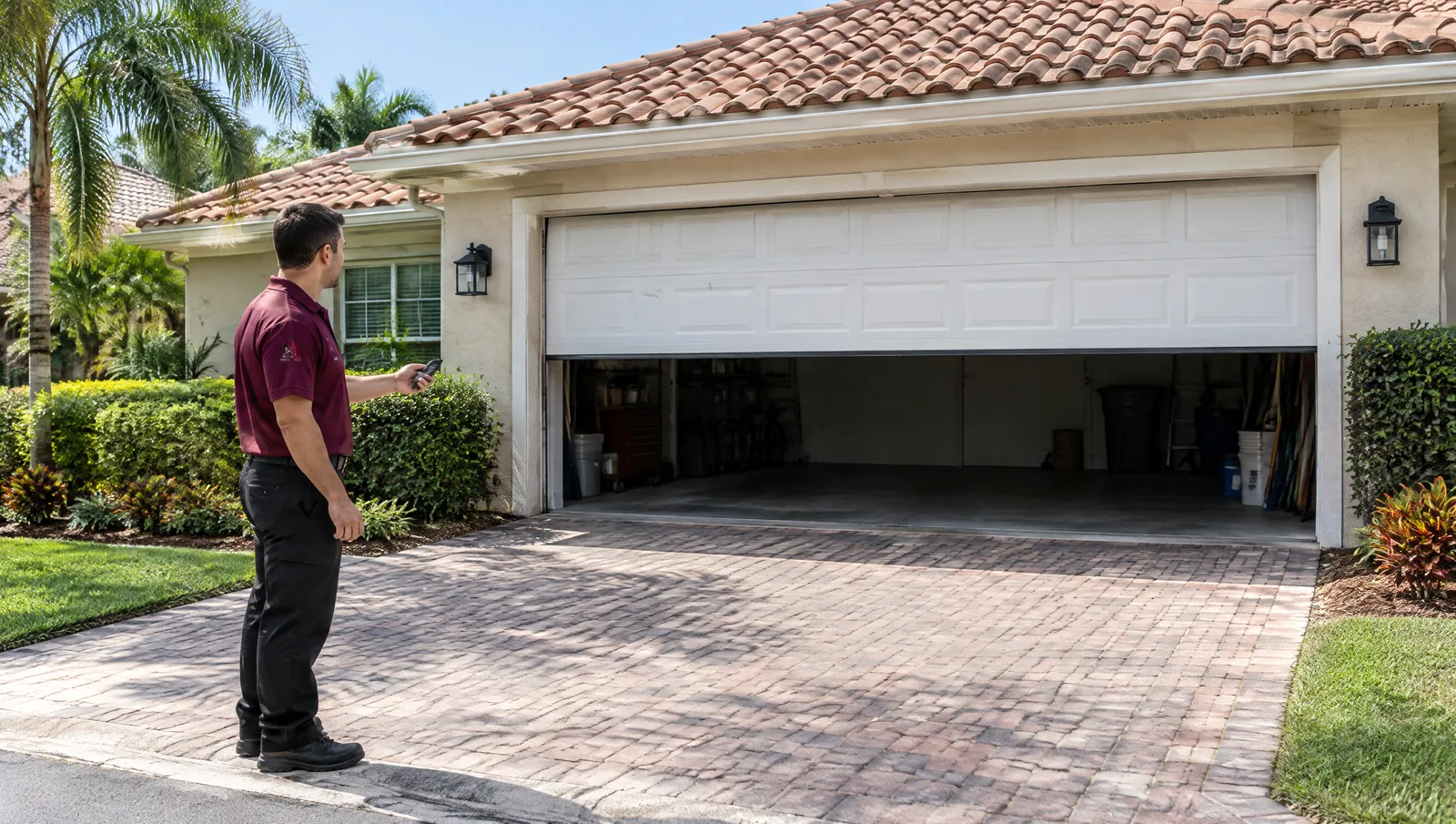
Doors that shudder, grind, stop halfway or close at an angle usually have worn rollers, loose hinges or tracks that have drifted out of line. In Plantation, where many homes went up in the 1970s through the 1990s, original hardware is often decades old and dry. Fixing these parts early keeps a small problem from becoming a spring or cable failure.
Garage door repair
Broken spring replacement
A snapped torsion spring above the door is the classic Monday-morning surprise in Plantation. The remote does nothing, or the door lifts a few inches and stops. Larger two-car doors common on Plantation's detached houses often use two springs, so the condition of the second one matters. Leave the door closed and call.
Spring repair
Opener, remote and sensor repair
Openers live in the hottest room of the house, and a closed Plantation garage in August is a hard place for a motor and a circuit board. A motor that hums without lifting, a keypad that stopped answering or a door that reverses near the floor are the usual complaints. Safety sensor lenses that have been knocked out of line or fogged by humidity are a frequent and simple cause, and older openers on Plantation's 1980s homes may lack a rolling-code remote altogether.
Opener repair
Lift cable repair
When one side of the door hangs lower than the other, a lift cable has often frayed, slackened or come off its drum. In Plantation the damp summers leave a light coat of rust on cables that have been in place for many years, and a frayed strand is the first warning. Cables work with the springs, so a cable problem in a Plantation garage is checked together with the spring tension, never on its own.
Cable repair
Off-track door repair
A car bumper, a seized roller or a cable that let go can pull a door out of its track. Wide two-car doors on Plantation's detached houses carry a lot of weight on each roller, so one failure can tip the whole door. If yours is leaning, jammed or crooked, unplug the opener and leave it where it is. Forcing it bends panels and track, which turns a simple reset into a much bigger repair.
Off-track repair
Replacing a door that has run its course
Some Plantation doors have simply reached the end of the road. A door hung when the house was new in the 1980s may have dented panels, a sagging middle section or a bottom edge that no longer seals against afternoon downpours. Swapping it out is more than a carpentry job here. In Broward County a replacement door normally goes through a building permit, and the door has to carry a wind-load rating for its opening plus a Florida or Miami-Dade product approval. Ask to see that approval number before any door is ordered.
Garage door installation
Quieter rollers for older tracks
Rollers are the small wheels that carry the door up and down its tracks, and Plantation's long, damp summers are hard on them. The bearings in plain steel rollers rust and start to grind. On houses built through the 1970s and 1980s, original rollers are often worn flat on one side or wobbling on their stems, which makes the door rattle and pushes the opener harder. New rollers settle that down. The bottom pair sits in brackets tied to the spring cables, so leave those to a trained technician.
Roller replacement
Coating the concrete floor
Epoxy is a coating for the garage floor, not the door. A garage that also serves as a workshop, laundry corner or storage room is far easier to keep clean once the concrete is sealed, and oil drips wipe off instead of soaking in. The catch in Plantation is humidity. A closed garage can hold moisture through the wet season, and epoxy laid over a damp slab may never cure and can peel later. Good work starts with a moisture check, crack repair and etching or grinding so the coating can grip.
Epoxy garage flooring