
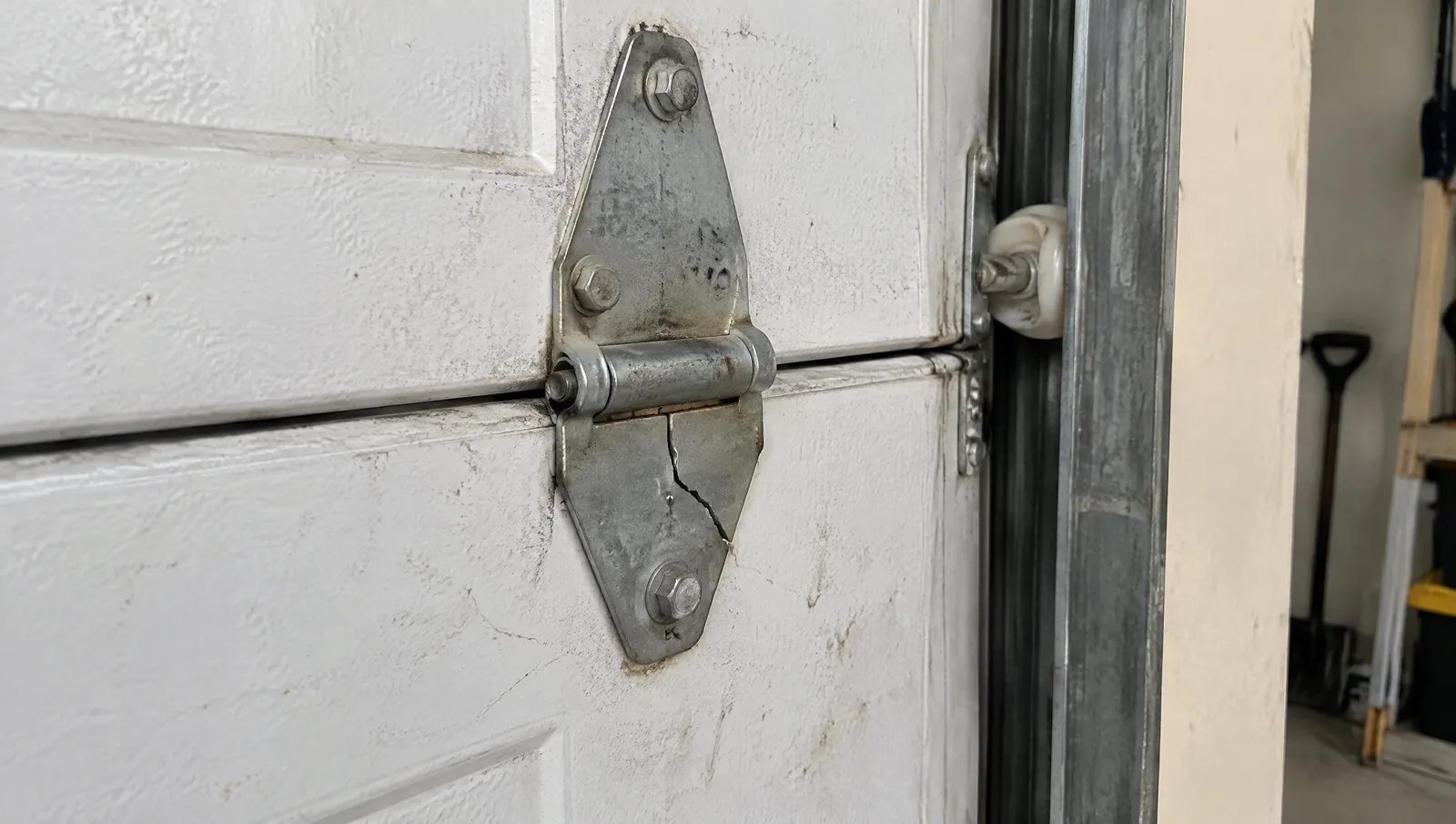
Every garage door makes some noise. A steady hum from the opener and a soft rumble from the rollers are normal. What deserves attention is a change: a sound you didn't hear last month, a noise that has grown louder, or one that only happens at a certain point in the door's travel. Here is what the most common sounds usually mean.
Squeaking and squealing
A high squeak that follows the door up and down is almost always metal rubbing on metal without enough lubricant. The usual sources are the hinges between the sections, the roller stems where they sit in the hinges, and the springs themselves. A light coat of garage door lubricant on those points often quiets it within a few cycles.
If the squeal comes from the ceiling and only when the opener runs, it can be the opener's drive, a dry chain or a worn bearing in the motor unit.
Grinding
Grinding is a rougher sound and usually means something is wearing out. Steel rollers with failing bearings grind as they turn. A roller that has stopped turning altogether slides along the track and scrapes. Grinding can also come from a track that has been knocked out of line, so the rollers rub the edge instead of running down the middle.
If the grinding comes from the opener head rather than the door, the gears inside may be stripping. That often shows up alongside the motor running without the door moving.
Rattling and vibration
Doors shake their own hardware loose over time. A rattle when the door moves usually means loose bolts on hinges, track brackets or the opener rail mount. A slapping or rattling chain on a chain-drive opener means it has stretched and needs tensioning. Tightening fasteners is reasonable homeowner work, but leave anything attached to the bottom brackets alone. Those hold the cable ends, and they are under spring tension.
Popping, creaking and snapping
A dry torsion spring can creak or pop softly as its coils rub against each other while it winds and unwinds. That sound is a warning that the spring needs lubricant and an inspection, not a crisis.
One sharp snap is different. If you heard a single loud crack, like a gunshot, and the door now feels heavy or won't lift, a spring has likely broken. Stop using the door. Our article on how to tell a garage door spring is broken explains what to check from a safe distance.
Banging and thudding
A door that slams down hard at the end of its travel is often out of balance, with springs that no longer carry their share of the weight. A thump partway up can mean a cable has gone slack and jerks tight, or that a roller is catching on a damaged spot in the track. A bang followed by the door hanging crooked suggests a cable or a roller has come out of place.
Scraping
Scraping usually means the door itself is rubbing something it shouldn't. That might be a track that has bent inward, a weatherstrip along the frame pushed out of position, or a door that has started to tilt so one edge drags. A tilted door is worth taking seriously. Rollers can pop out of the track if it keeps running that way.
Noise, heat and humidity
In Davie, an inland town with hot, humid summers and frequent summer thunderstorms, lubricant on hinges and rollers tends to collect dust and grime faster than you might expect. Gummed-up hardware is a common cause of squeaks and stiff movement here. Davie also has a wide mix of homes, from detached houses to attached townhomes, and on attached homes a noisy door is more likely to be heard through a shared wall.
Which sounds mean stop
- A loud bang followed by a door that won't lift or feels heavy
- A door that tilts, scrapes or hangs crooked
- Grinding together with the door jerking or stopping
- A cable that looks loose or has come off its drum
In each case, unplug the opener and keep people and cars clear of the doorway. Running a door in that state can turn a single-part repair into a much larger one.
For a door that is binding, tilting or scraping, see our garage door off-track repair page. Noise from the motor head is covered under garage door opener repair. Call NovaLift Garage Doors at (954) 758-9013 and describe what you're hearing.