
A door that refuses to close is maddening, especially when you are trying to leave. It can also feel like a sign that something expensive has broken. Usually it hasn't. An automatic opener has two separate ways of deciding that closing is unsafe, and either one will send the door back up. Working out which one is involved points you straight at the cause.
How the safety sensors work
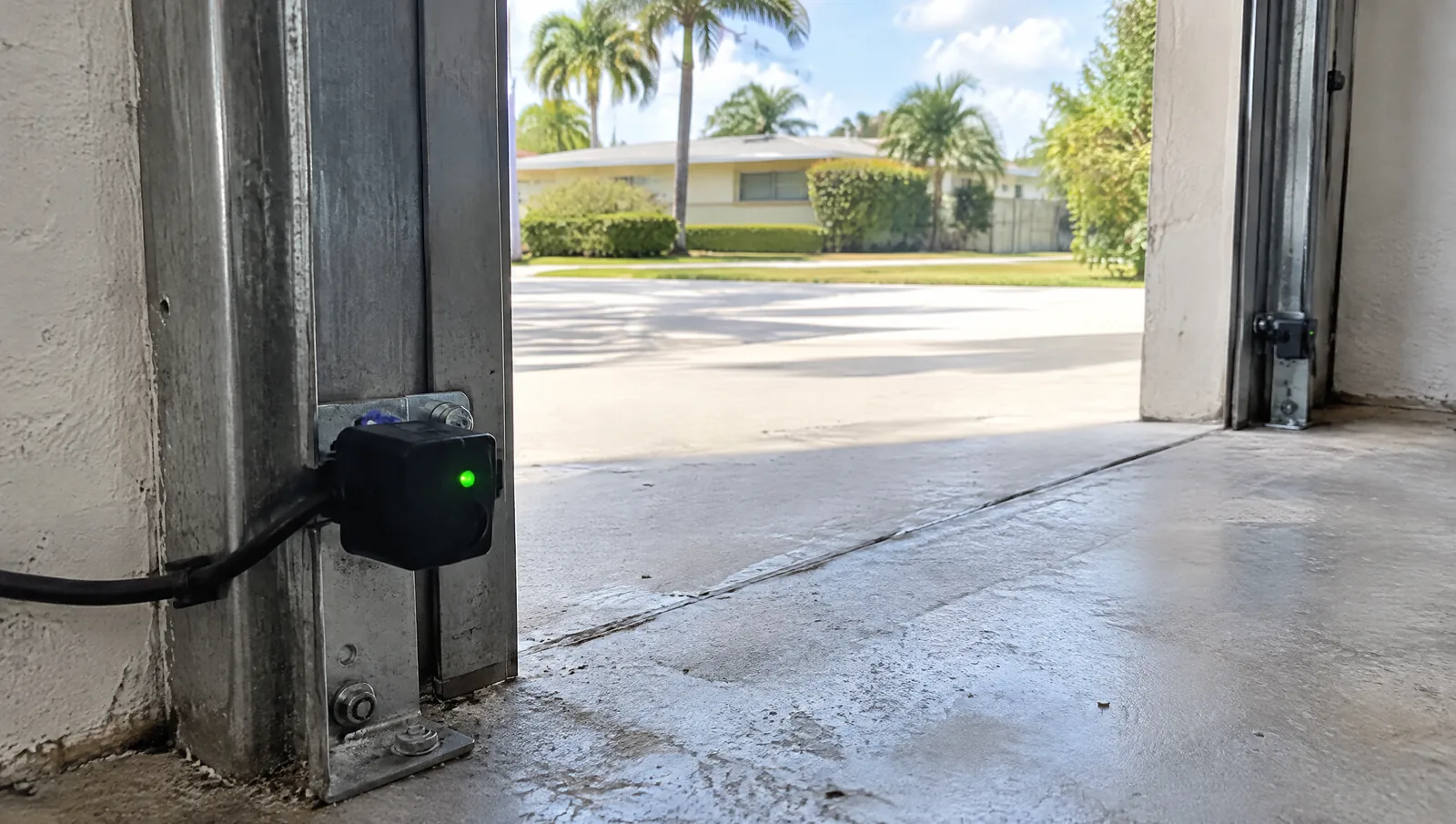
Near the bottom of each vertical track sits a small box. One is a transmitter that sends an invisible infrared beam across the doorway. The other is a receiver that watches for it. As long as the receiver sees the beam, the opener is allowed to close the door. The moment something breaks that beam, whether it's a child, a pet or a bicycle tire, the opener stops and reverses.
Most sensors have a small indicator light. On many brands the transmitter shows a steady light whenever it has power, and the receiver light stays steady only when it can see the beam. A receiver light that is off, dim or flickering usually means the two boxes have lost sight of each other. Your opener's manual will say exactly what each color means for that model.
The second safety system: force
The opener also measures how hard it has to push. If the door meets more resistance than expected on the way down, the motor assumes it has hit something and reverses. That protection doesn't involve the sensors at all. It reacts to the door itself binding, dragging or landing on the floor.
Read the timing
When the door reverses tells you a lot about why.
- It reverses right away, or the opener lights blink: the sensors almost certainly can't see each other.
- It reaches the floor, then pops back up: the travel limit is probably set too low, so the motor keeps pushing after the door has landed and reads that as an obstruction.
- It stops partway with no blinking: something is making the door hard to move, such as a dry roller, a bent track or a spring that has weakened.
Sensor problems you can check yourself
Something in the beam
Look along the floor between the two sensors. A broom handle, a recycling bin, a leaf caught in a spider web or even a long weed growing at the door edge can block the beam. Clear the path and try again.
Dirty lenses
Dust, pollen and garage grime build up on the small lens of each sensor. Wipe both with a soft, dry cloth.
A bumped bracket
The sensor brackets are thin and sit right where feet, mowers and car bumpers pass. A slight knock is enough to aim one past the other. Loosen the wing nut, line the sensor up until the receiver light goes steady, and tighten it again.
Sunlight
When a low sun shines straight into the receiver, it can drown out the beam. If the door only misbehaves at a certain time of day, glare is a likely suspect. Swapping which side the transmitter sits on often solves it.
Wiring
Follow the thin wires from each sensor back to the opener. Staples driven through the cable, a pinch where it crosses a track, or corroded connections at the motor head can all cut the signal. Damaged wiring is worth having repaired properly rather than twisted together.
Heat, humidity and storms
Sensors are small electronic parts that live close to the floor, where water and dirt end up. In Miami Gardens, an inland city where most homes are detached houses, the long humid summers and frequent storms are the main load on this equipment. Rain blown under the door can wet the lower sensor housings, and condensation can fog a lens or creep into connections. A sensor that works one day and not the next during a wet spell often has moisture somewhere in its wiring.
What never to do
Don't tape the sensors together, mount them up near the ceiling or disconnect them to make the door close. They exist because a closing door is heavy enough to seriously hurt a child or an animal. If you must close the door before a repair, most openers let you hold the wall button down until the door reaches the floor. Watch it the whole way.
When to call for help
If the sensors are clean, aimed and powered and the door still reverses, the trouble is likely in the opener settings or in the door itself. Travel limits and force settings need adjusting with care, because setting the force too high defeats the safety feature. Binding hardware needs to be found and fixed, not overpowered.
Our garage door opener repair page covers sensor, wiring and logic board problems in more detail. If the door also makes a loud bang or suddenly feels heavy, read how to tell a garage door spring is broken before trying it again. You can reach NovaLift Garage Doors at (954) 758-9013.