
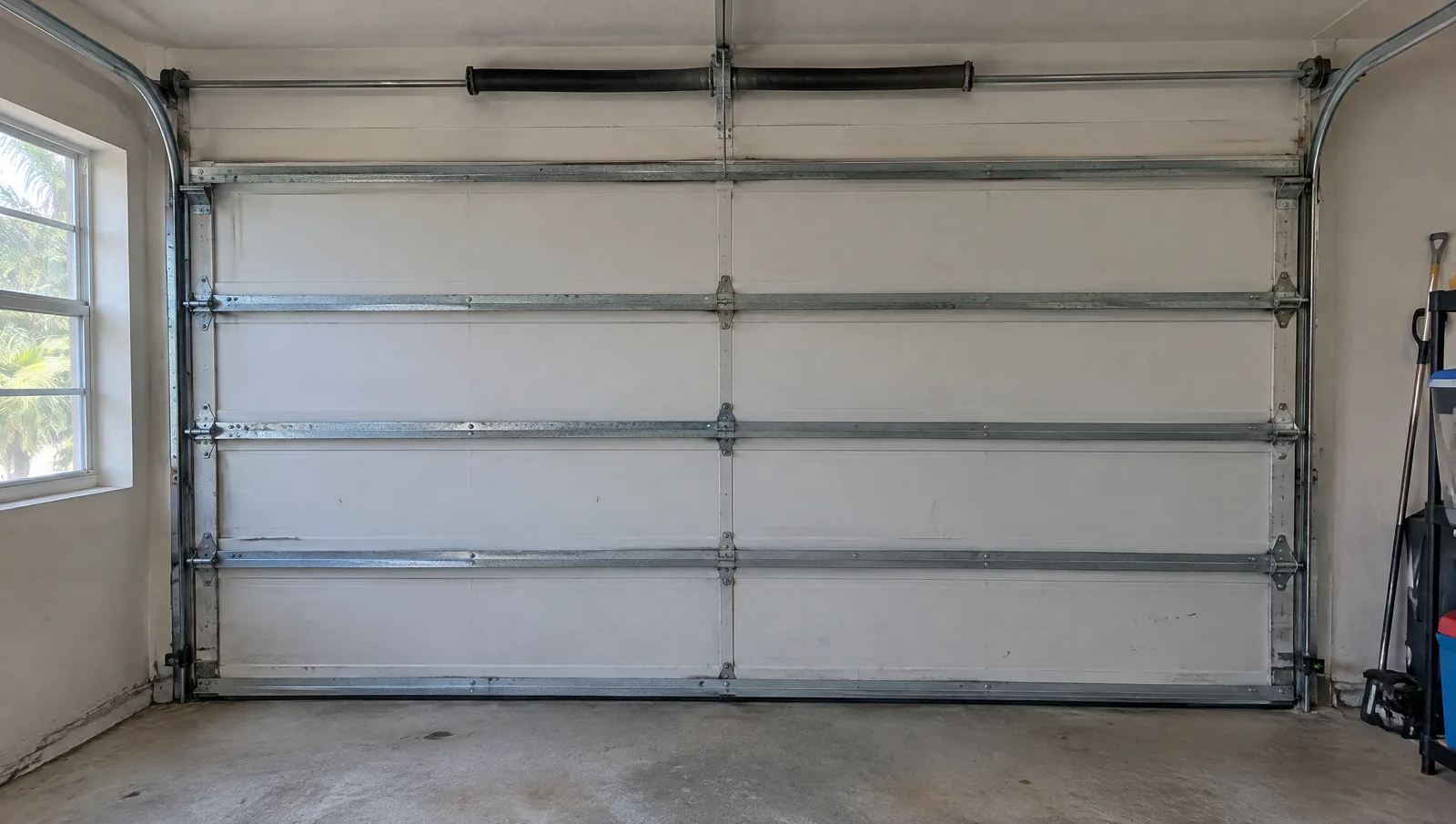
Garage doors get special attention in hurricane country for a simple reason. They are big. FEMA's hurricane mitigation guidance describes garage doors as among the largest openings in a building and notes that, because of their size, wind can blow them in, pull them out or twist them off their tracks. Once a door that size fails, wind and rain get inside. That is why South Florida treats the garage door as a tested building product rather than just a moving panel.
What a Notice of Acceptance is
In Miami-Dade County, building products used against hurricane winds are reviewed by the county's Product Control Section. A product that passes is issued a Notice of Acceptance, usually shortened to NOA. Each NOA describes one specific product, lists the drawings and test reports it was approved on, and carries an approval date and an expiration date.
When a garage door is installed under a permit, the paperwork matters as well as the door. Miami-Dade's shop drawing checklist for overhead sectional doors asks for copies of the Notice of Acceptance for each overhead door being installed, along with a plan showing the size and location of the openings and the building's mean roof height. The same checklist allows a High Velocity Hurricane Zone approval from the Florida Building Commission in place of the county's NOA.
What the label says
The NOA itself spells out what goes on the door's permanent label. One Miami-Dade NOA for an aluminum sectional garage door, for example, requires a label showing the manufacturer, model number, positive and negative design pressure and the NOA number. That label also lists whether the door is impact rated, the installation drawing it follows, the test standards and the words "Miami-Dade County Product Control Approved."
Positive and negative design pressure
These two numbers are the heart of the label. Positive pressure is wind pushing in on the face of the door. Negative pressure is the suction that pulls outward, often on the side of a house away from the wind. Both are given in pounds per square foot, and a door has to hold against both. The pressure a given opening has to resist depends on the building's location, height and exposure.
Impact rating
Some doors are also tested against wind-borne debris. If yours was, the label says so. For a door without that rating, FEMA's guidance lists impact-resistant shutters installed in front of the existing door as one way to protect the opening.
Where to find the label
Look on the inside. The NOA quoted above places the label on the door's side track, the bottom angle or the inner surface of a panel. Check the vertical tracks at about eye level and the lower panels first. On older doors the label may be faded, painted over or hidden behind storage, so a flashlight helps.
Looking up an approval
Once you have the NOA number, you can find the full document through Miami-Dade's Product Control search, which lets you search by file number or browse by category and applicant. The document shows the approval and expiration dates and the drawing the door was installed to. If the label is missing, the manufacturer and model number from the door's other markings are a good starting point.
Why it matters for repairs
An NOA approves a specific door assembly as shown on its approval drawing, down to the hardware. Replacing a spring or a cable doesn't change the door's design, but bent tracks, missing reinforcement or the wrong fasteners can weaken how the door handles wind pressure. When parts are replaced, matching what the approval drawing calls for is the sound approach. If a repair involves anything beyond like-for-like parts, your city's building department can tell you whether a permit is needed.
FEMA's guidance also advises making sure any replacement door is rated for the wind speed and wind pressure where the building is located. If you are thinking about a new door rather than a repair, that is the number to check first. For the routine checks that keep existing hardware sound, see what a garage door tune-up should include.
Bay-side homes in North Miami
In North Miami, the city's eastern sections sit on Biscayne Bay, where salty, humid air speeds corrosion of springs, cables, rollers and hinges. The housing stock is older too, with a median year built of 1967. Corrosion slowly eats at the very hardware an approval relies on, so on bay-side homes it is worth checking the condition of tracks, brackets and fasteners along with the label.
NovaLift Garage Doors repairs springs, cables, openers and tracks. The approval of a door comes from the county and the manufacturer, not from the repair company. For bent tracks or a door that has come out of line, see garage door off-track repair, and for other problems our main garage door repair page. Call (954) 758-9013 with questions about your door.