
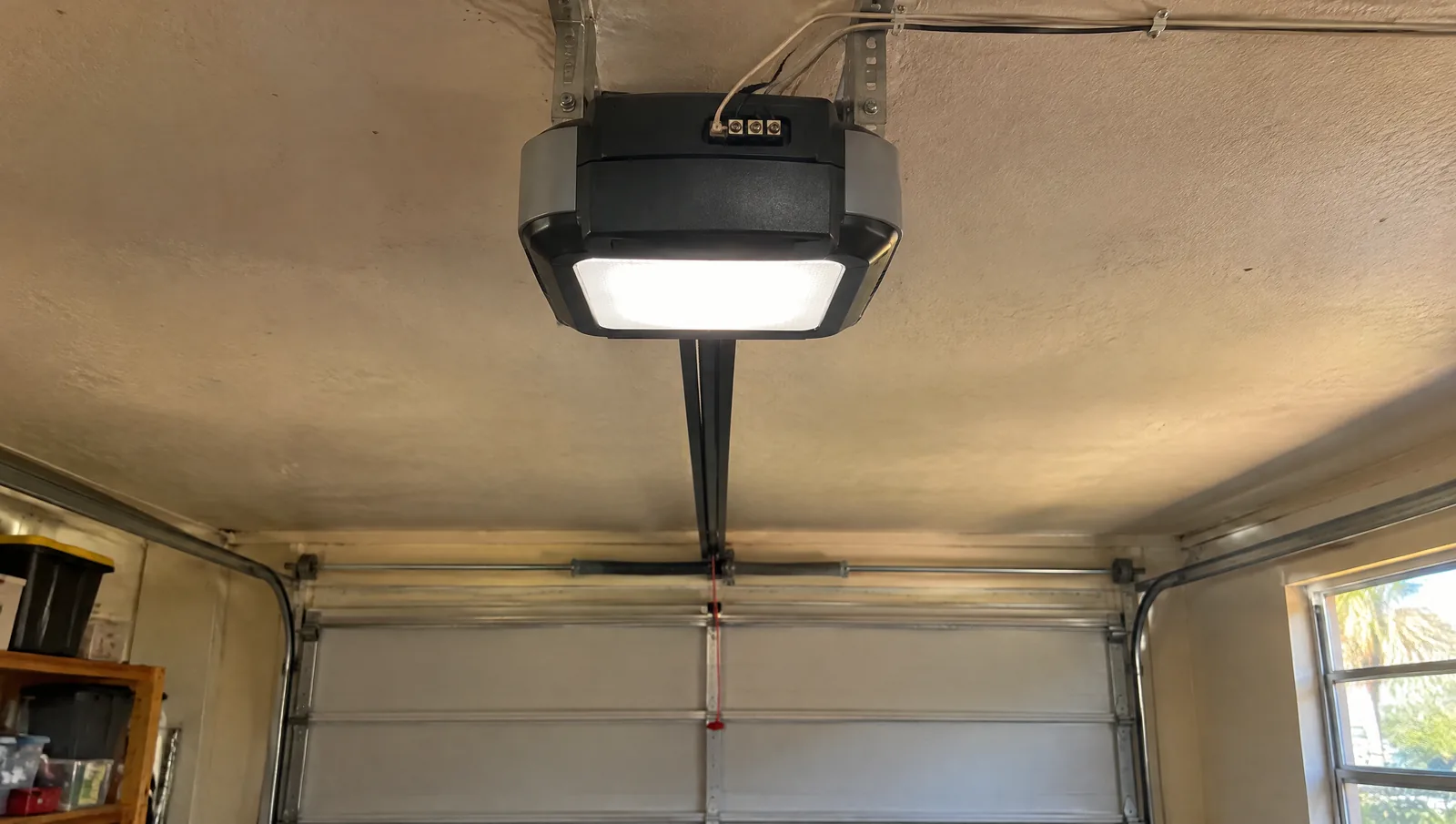
People tend to blame the weather for a slow commute or a dead car battery, not for an opener that refuses to close. Yet many of the opener faults that show up between late spring and fall have more to do with heat and moisture than with a part simply wearing out. Knowing the difference can save you from replacing something that only needed cleaning or a cooler afternoon.
Heat and the motor
Most openers have a thermal overload, a small safety switch that cuts the motor when it gets too hot. In a garage that is already very warm, running the door several times in a row, say while unloading groceries or moving bikes, can trip it. The door stops working, then comes back by itself after the motor has cooled for a while.
That pattern is a useful clue. If the opener only quits on hot afternoons after repeated use, overheating is the likely cause. If it quits in the cool of the morning too, look for something else, such as a door that is out of balance and making the motor work too hard.
Capacitors and gears
Many older AC openers use a start capacitor to get the motor turning. Heat shortens a capacitor's life, and a failing one often leaves the motor humming without moving the door. Inside the opener, the main drive gear on many models is plastic. Heat softens it a little, and a door that sticks or binds can strip its teeth faster in summer.
Humidity and the electronics
Damp air carries moisture into everything. On an opener, the weak points are the places where metal meets air:
- wire terminals on the back of the motor unit, where green or white corrosion can build up
- the thin wires running to the wall button and the safety sensors
- the logic board, which can act erratically when condensation forms on it
- the battery contacts inside remotes and keypads
Signs include a wall button that only works now and then, lights that flash for no clear reason and a door that starts to close and then reverses without anything in the way.
Sensors in a humid climate
The photo-eye sensors near the floor send an invisible beam across the doorway. If the beam is blocked or weak, the door won't close. Humidity causes trouble here in several ways.
The lenses can fog or collect a film of grime that weakens the beam. Rainwater splashing in under the door can soak the low-mounted units or their wiring. In the morning or late afternoon, low sun shining straight into the receiving sensor can blind it, so the door refuses to close at the same time each day and works fine an hour later.
Wipe the lenses with a soft dry cloth. Check that both sensor lights are steady, which usually means they are lined up. If the receiver faces the setting or rising sun, a small shade or simply swapping the two sensors to opposite sides can help. For other reasons a door keeps reversing, see why a garage door reverses before it closes.
Storms, surges and outages
Summer is also the season of thunderstorms and hurricane threats. Lightning nearby can send a surge down the power line and damage an opener's circuit board. A plug-in surge protector at the opener's outlet is a simple safeguard. Outages are the other half of storm season. Make sure you know where your manual release cord is and that it still hangs within reach.
A simple seasonal routine
A few minutes at the start of the wet season covers most of this:
- Clean both sensor lenses and check their lights.
- Look over the sensor and wall-button wiring for corrosion, cracked insulation or staples that have pinched a wire.
- Replace the batteries in remotes and keypads.
- Test the auto-reverse by closing the door on a roll of paper towels.
- Open a window or vent in the garage on hot days, if it has one, to let the heat out.
None of these steps involve the springs, cables or the inside of the opener. Those are best left to someone trained.
Why low, older neighborhoods feel it more
Location and age add to the load. Ojus sits low, between sea level and about 12 feet, with the Oleta River on its east side, and its long wet season brings near-daily thunderstorms. Much of its housing went up in the 1960s and 1970s, so some garages there still have openers wired in an earlier era, with aging terminals and sensor runs. The garage door repair in Ojus page lists the services NovaLift Garage Doors offers in the area.
When cleaning and resetting don't fix the problem, the next step is a proper diagnosis. Our garage door opener repair page explains how motors, boards, gears and sensors are tested. You can also call (954) 758-9013.