
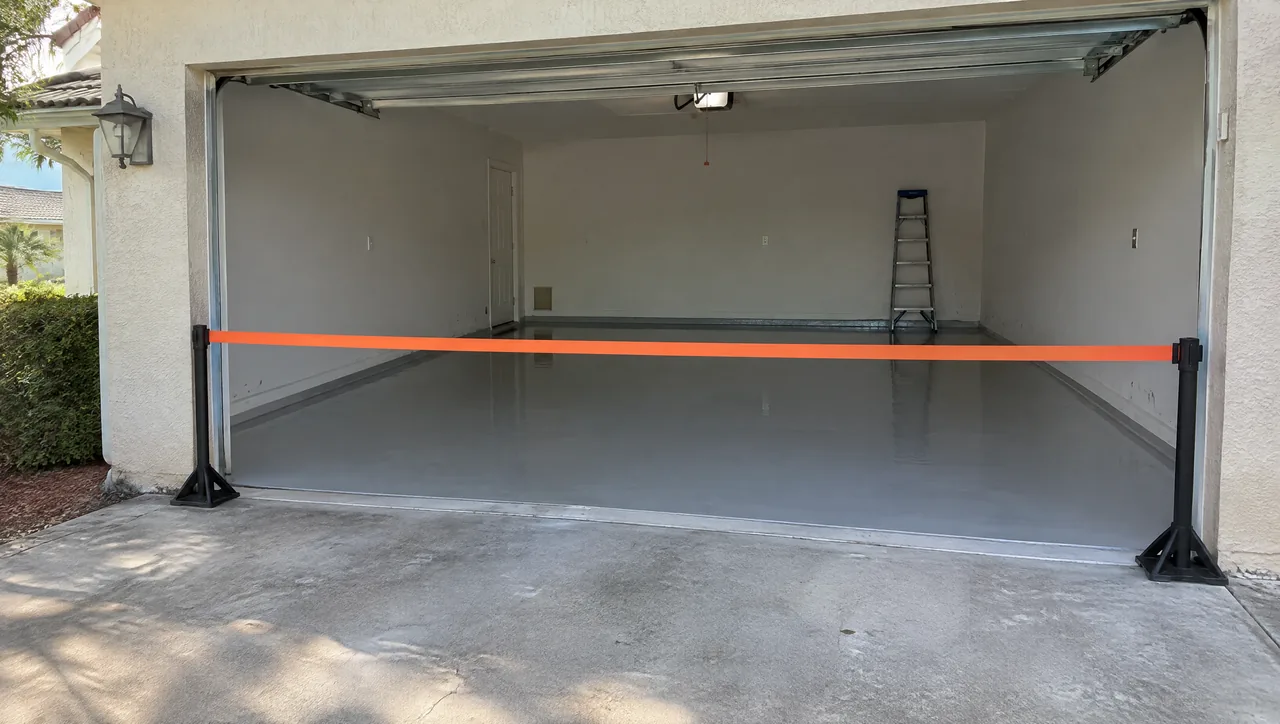
How long an epoxy garage floor takes to cure is the question almost everyone asks once the coating goes down, usually while the car is parked in the driveway. There isn't one answer for every floor. Epoxy hardens through a chemical reaction, and the time that reaction needs depends on the product, the temperature, the humidity and how thick the coat is.
What you can get is a clear picture of the stages, and one real set of numbers to show what a manufacturer's guidance looks like.
Dry to the touch is not the same as cured
Epoxy is mixed from two parts, a resin and a hardener. Once they meet, the mix starts to set. The surface skins over first, so a floor can feel dry fairly soon while the coating underneath is still soft. Full hardness comes later, as the reaction finishes through the whole layer.
That is why the guidance is given in steps. There is a time for walking on it, a longer time for driving on it, and often a longer one still before the floor reaches full strength against chemicals and heavy loads.
One manufacturer's numbers
Rust-Oleum's technical data sheet for its EpoxyShield water-based garage floor coating gives these dry times, measured at 70–80°F and 50% relative humidity:
- 24 hours before foot traffic
- 3 days before vehicle traffic
The same sheet asks for new concrete to cure for at least 28 days before it is coated. It also says the product isn't intended for floors that have a moisture problem.
Those figures belong to that one product. Other systems differ, sometimes a lot. Solvent-based epoxies, high-solids professional epoxies and coatings finished with a polyaspartic topcoat each come with their own times, so the data sheet for whatever goes on your floor is the one to follow.
Why a South Florida garage changes the clock
Notice the test conditions on that sheet. A closed garage in a Broward summer is often hotter and far more humid than 50%. Published times assume the conditions printed beside them, so a garage outside that range may not match them.
Humidity matters for more than timing. This Old House notes that if the room's humidity isn't low enough when epoxy is applied, the coating may not cure correctly and can peel. Moisture can also come from below. A slab that wicks water up from the ground pushes against the coating from underneath, which is why a moisture check belongs in the prep, not after the fact.
A common homeowner test is to tape a square of clear plastic sheet tightly to the bare floor and leave it for a day. If the concrete under it darkens or droplets form on the underside, moisture is coming through and needs attention before any coating goes down.
The prep decides whether the cure works
Cure time only matters if the coating can grip the floor. Bob Vila points out that chips, cracks and crumbling concrete have to be repaired before epoxy is applied, and that most concrete floors need to be acid washed or etched first. Oil and tire stains on an older slab also need to come out, because epoxy won't bond to a greasy surface.
Prep takes time of its own. Cleaning, etching or grinding, filling cracks and letting repairs and the washed slab dry all happen before the first coat. When you plan when the garage will be out of use, count those days too.
Protecting the floor while it cures
Keep traffic off, then go gently
When the walking time has passed, wear clean, soft-soled shoes and avoid dragging anything across the floor. Leave heavy items such as toolboxes, freezers and workbenches off until the floor has fully cured.
Mind the line under the garage door
The door's bottom seal rests on the floor at the threshold. Closing the door onto coating that is still soft can mark the finish or leave the seal stuck to it. Ask how the threshold will be handled, and if you need the door closed for security, check the timing with the installer first. It is also a good moment to look at the seal itself. Our guide to garage door bottom seals explains how a worn one lets rain and debris in.
Wait for the vehicle time, then a bit more if it's hot
Tires that have just come off hot pavement soften and press into the surface. On a coating that hasn't fully hardened, that can leave marks or lift the finish where the tires sit. Parking for the first time after a short drive, rather than a long one, is a sensible habit.
A typical timeline, step by step
- New slab: let the concrete cure first (that data sheet asks for 28 days).
- Prep: clean, degrease, repair cracks and etch or grind, then let the floor dry.
- Moisture check before anything is mixed.
- Coats go down, with the recoat timing the product calls for.
- Foot traffic after the product's walking time.
- Vehicles after the product's driving time, longer in heat or humidity if the installer advises it.
Older slabs in Broward homes
Many garages getting coated aren't new. In Cooper City, most homes are owner-occupied single-family houses and the median home was built in 1987, so a lot of garage slabs there have decades of oil drips, hairline cracks and patched spots to deal with first. Summers there are long and humid, with frequent showers and thunderstorms, which is exactly when moisture and timing need the most care. The garage door repair in Cooper City page covers the services NovaLift Garage Doors offers in the area.
For how the floor is prepared and coated, plus national cost ranges, see epoxy garage flooring. To talk through your floor, call (954) 758-9013.