
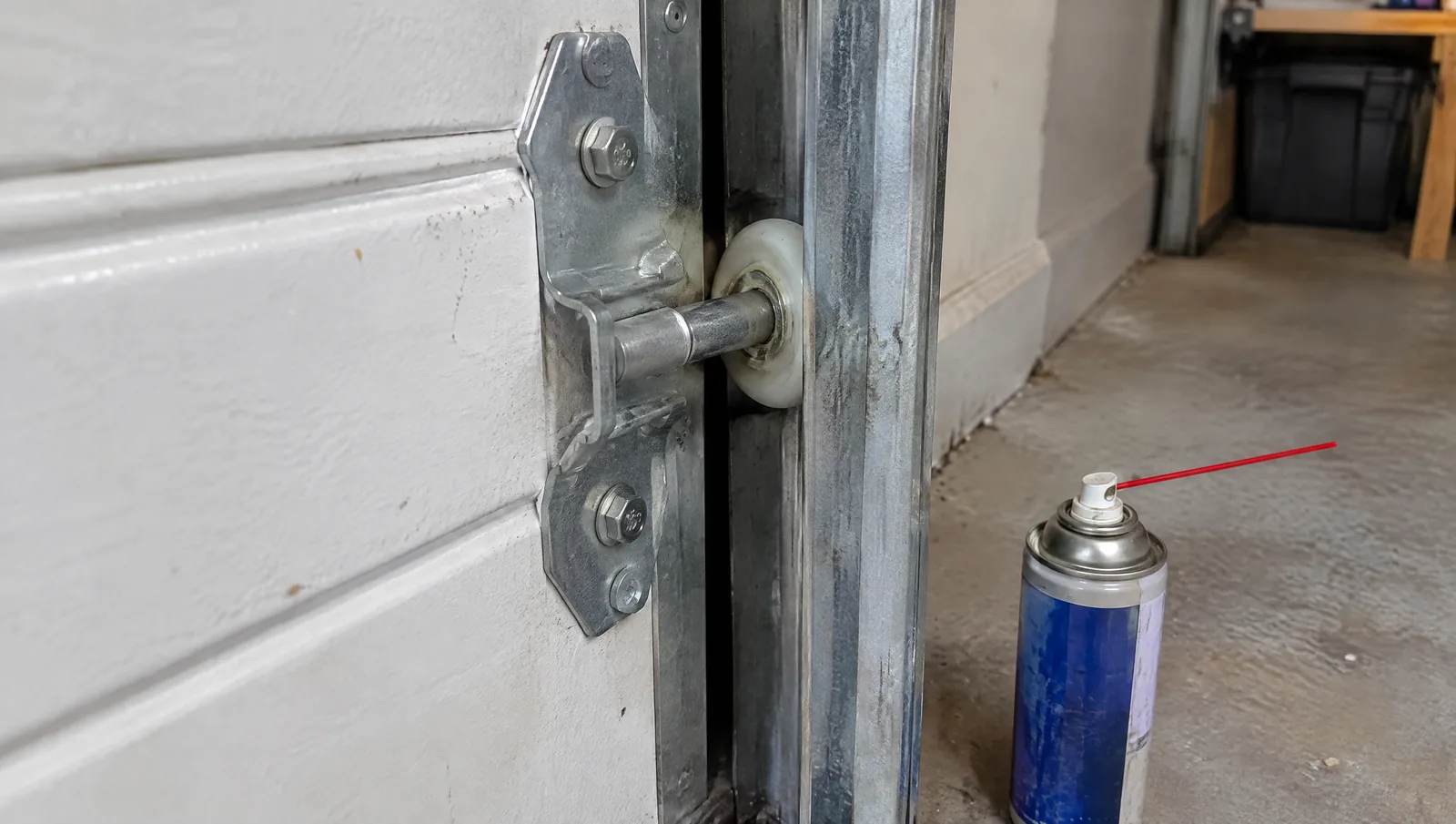
Lubrication is one of the few garage door jobs a homeowner can do safely. It doesn't need special tools, and it pays off in a quieter door and parts that wear more slowly. The trick is knowing which parts actually move against each other and which ones are better left clean and dry.
Choose the right product
Use a spray lubricant sold for garage doors, usually a white lithium grease spray or a silicone-based spray. Both cling to metal without dripping and go on thin enough to get into hinges and bearings.
Avoid heavy wheel-bearing grease, motor oil and anything sticky. Thick lubricants catch dust and grit and turn into a paste that makes parts wear faster. A general-purpose penetrating spray is useful for loosening rust, but it is mainly a cleaner and water displacer and doesn't stay put long enough to work as a lubricant on its own.
Get set up safely
- Close the door fully.
- Unplug the opener or switch off its circuit so nobody runs the door while your hands are near it.
- Wipe away old, dirty grease with a rag before adding new lubricant.
- Keep a rag in your other hand to catch overspray.
What to lubricate
Hinges
Each hinge between the door sections has a pivot point. Spray a short burst into it. On steel hinges this is often where squeaks start. Plastic hinges can be skipped, because some lubricants soften certain plastics.
Roller bearings
On steel rollers with exposed bearings, aim a little lubricant at the bearing in the center of the wheel. On nylon rollers, put it on the stem and the bearing, not on the nylon tire. Wipe off anything that lands on the wheel surface.
Torsion springs
Spray a light coat along the length of each spring, then wipe away drips. It cuts down on the creaking of coils rubbing together and helps keep rust off the wire. Spray from a reasonable distance and don't touch, adjust or try to move the spring or its winding cones.
Bearing plates and center bearing
The shaft above a torsion door turns inside a bearing at each end and usually one in the middle. A short burst into each helps them turn freely.
The lock and arm bar
If your door has a manual lock, a little lubricant on the lock bar where it slides keeps it from sticking.
What to leave dry
- The tracks. Rollers are meant to roll, not slide. Grease in the tracks collects dirt and makes rollers skid. Wipe the tracks clean with a damp rag instead.
- Lift cables and drums. Leave them alone. The cables are under constant tension, and the bottom brackets that hold their ends can cause serious injury if disturbed.
- Belt drives. If your opener uses a rubber belt, don't lubricate it. A chain-drive opener may call for lubricant on the chain or rail, so check its manual first.
- Safety sensors. Keep spray away from the photo-eye lenses. A film of oil can block the beam.
- Weatherstripping. The rubber seals don't need oil, and petroleum products can break some of them down.
Finish and test
Plug the opener back in and run the door up and down several times. That spreads the lubricant through the hinges and bearings. Wipe off any drips that appear. If the door is still noisy afterward, the sound probably comes from a worn part rather than a dry one. Our guide to garage door noises can help you narrow it down.
How often
A few times a year suits most doors, with more attention in hot, damp weather. In Plantation, which sits inland where salt air isn't a particular concern, the bigger factor is the long humid summer that keeps garages hot and damp. Moisture encourages rust on springs and hinges, so a light coat before the wet season starts is a sensible habit. The median home in the city was built in 1984, and doors with older steel hardware usually benefit from regular attention.
When oil isn't the answer
Lubrication helps healthy parts last. It won't fix a spring that has lost tension, a frayed cable or a bent track. If a spring looks stretched, gapped or rusted through, read about garage door spring repair. For anything else that seems off, our main garage door repair page explains the common problems. NovaLift Garage Doors is at (954) 758-9013.