
Comparing nylon vs steel garage door rollers sounds like a simple materials question. It isn't quite. A cheap nylon roller and a good nylon roller are very different parts, and the same goes for steel. Before choosing, it helps to know how a roller is put together and what each design is good at.
If you are still working out whether yours are actually worn, start with our guide to the signs garage door rollers are worn. This article picks up where that one ends, at the point of choosing new ones.
How a roller is built
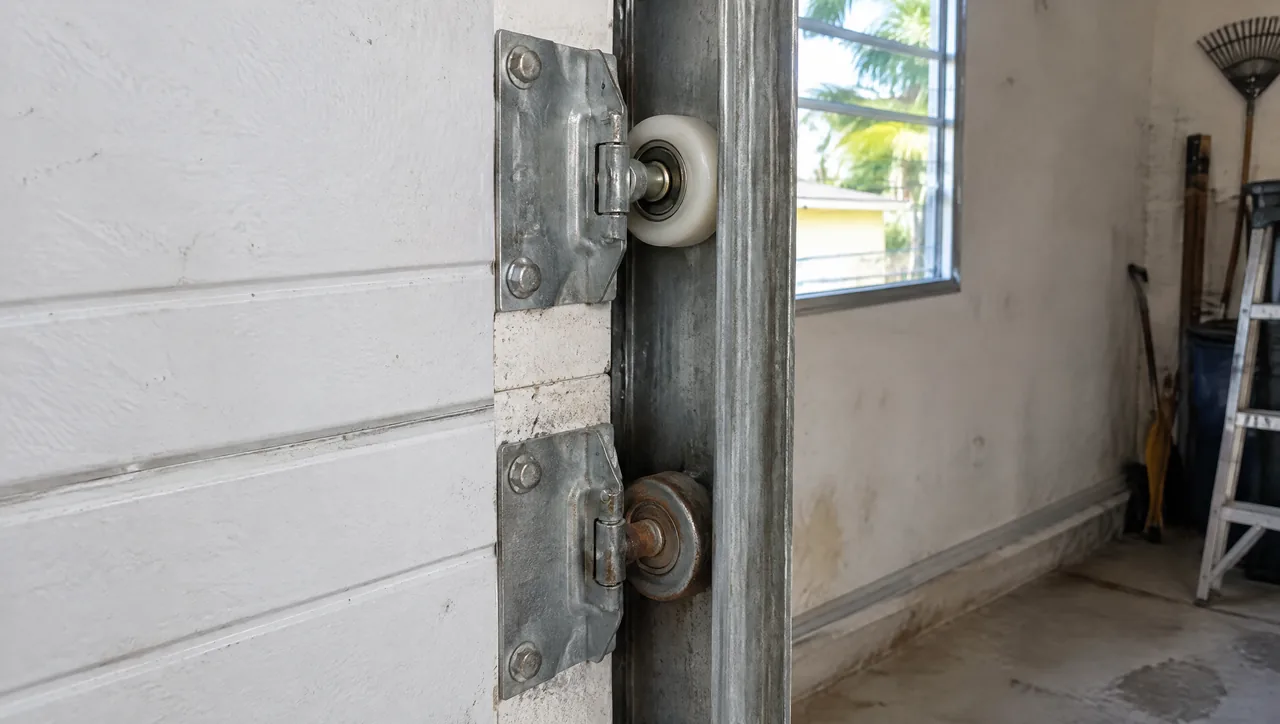
Every roller has three parts that matter. There is the wheel that rides in the track, the bearing (if any) that lets the wheel spin freely, and the stem that slides into the hinge or bracket on the door. Two rollers that look alike from across the garage can differ in all three.
The wheel
Steel wheels are stamped from sheet metal. Nylon wheels are molded around a hub. Nylon is softer, so it rolls with less clatter and is gentler on the track.
The bearing
This is the part people overlook. Some rollers have no real bearing at all, just a wheel turning on its stem. Others have loose ball bearings packed into the hub, and better ones have a sealed or shielded ball bearing that keeps out dust and moisture. A wheel with a proper bearing turns easily under load, which is what keeps the door running smoothly.
The stem
Stems come in different lengths. Standard hinges take a standard stem, while some heavier doors use wider hinges that need a longer one. The stem has to sit deep enough in its hinge that the roller can't pull out when the door flexes.
The case for nylon
Nylon rollers with sealed bearings are the most common upgrade on residential doors, and the reasons are practical.
- Noise. They are noticeably quieter. On a garage under a bedroom or beside a living room, that alone can settle the choice.
- Smoothness. A good sealed bearing spins freely for a long time and needs only occasional lubrication.
- No rust on the wheel. The wheel itself can't corrode, though the stem and bearing are still steel.
The weak spot is the cheap version. Plain nylon or plastic rollers with no bearings are quiet when new, but the hole in the wheel wears oval and they crack more readily. They are the ones most often found broken in the track.
The case for steel
Steel rollers earn their place on heavy doors. A wide, insulated two-car door or a wood door puts more weight on each roller, and a steel wheel with a good bearing handles that load without deforming.
- Strength. Steel wheels hold their shape under heavy or uneven loads.
- Durability in rough use. They tolerate a door that gets bumped or knocked out of line better than a plastic wheel.
The trade-off is noise, which is louder metal on metal. Basic steel rollers without proper bearings also wear quickly and are the type most likely to seize.
Salt air and humidity change the answer
Near the coast, corrosion is the main enemy of roller hardware. Exposed steel wheels and unsealed bearings rust, and a rusted bearing stops turning, which turns a rolling wheel into one that drags. Sealed bearings hold up better because moisture and salt have a harder time getting in. On a nylon roller only the stem and bearing are steel, which leaves less metal exposed.
Dania Beach is a good example. It sits right on the Atlantic coast, and its long, humid summer brings showers or thunderstorms almost every day. Garages there see salt and moisture year round, which is why sealed-bearing rollers are usually the safer choice. The garage door repair in Dania Beach page covers the services NovaLift Garage Doors offers there.
Questions to answer before you choose
- How heavy is the door? A light single-car steel door does well on nylon. A heavy wood or wide insulated door may call for steel or a heavy-duty nylon roller rated for the weight.
- Does noise matter here? If a room shares a wall or ceiling with the garage, nylon with sealed bearings is hard to beat.
- How close is the salt? Coastal garages favor sealed bearings and less exposed steel.
- What stem length do the hinges need? Match the stem to the hinge, not to whatever is cheapest.
- How hard is the door used? Some rollers are rated in cycles, like springs. A door used several times a day justifies a longer-rated roller.
Whatever you choose, keep it a matched set. Mixing one or two new rollers in with old ones leaves the door running unevenly, with the worn ones still dragging.
Why fitting them is a job for a technician
The middle rollers come out by opening the hinges, which means handling heavy door sections. The bottom rollers are more serious. They sit in the bottom brackets, and those brackets are tied to the lift cables and springs. DASMA, the door manufacturers' association, says bottom brackets are under strong tension and should be adjusted or loosened only by a trained door systems technician. A replacement visit is also a good moment to check the tracks, hinges and cables the rollers ride on.
For what the work involves and national cost ranges, see garage door roller replacement. If your door has started to grind, shake or catch, call (954) 758-9013 and ask which rollers suit it.