
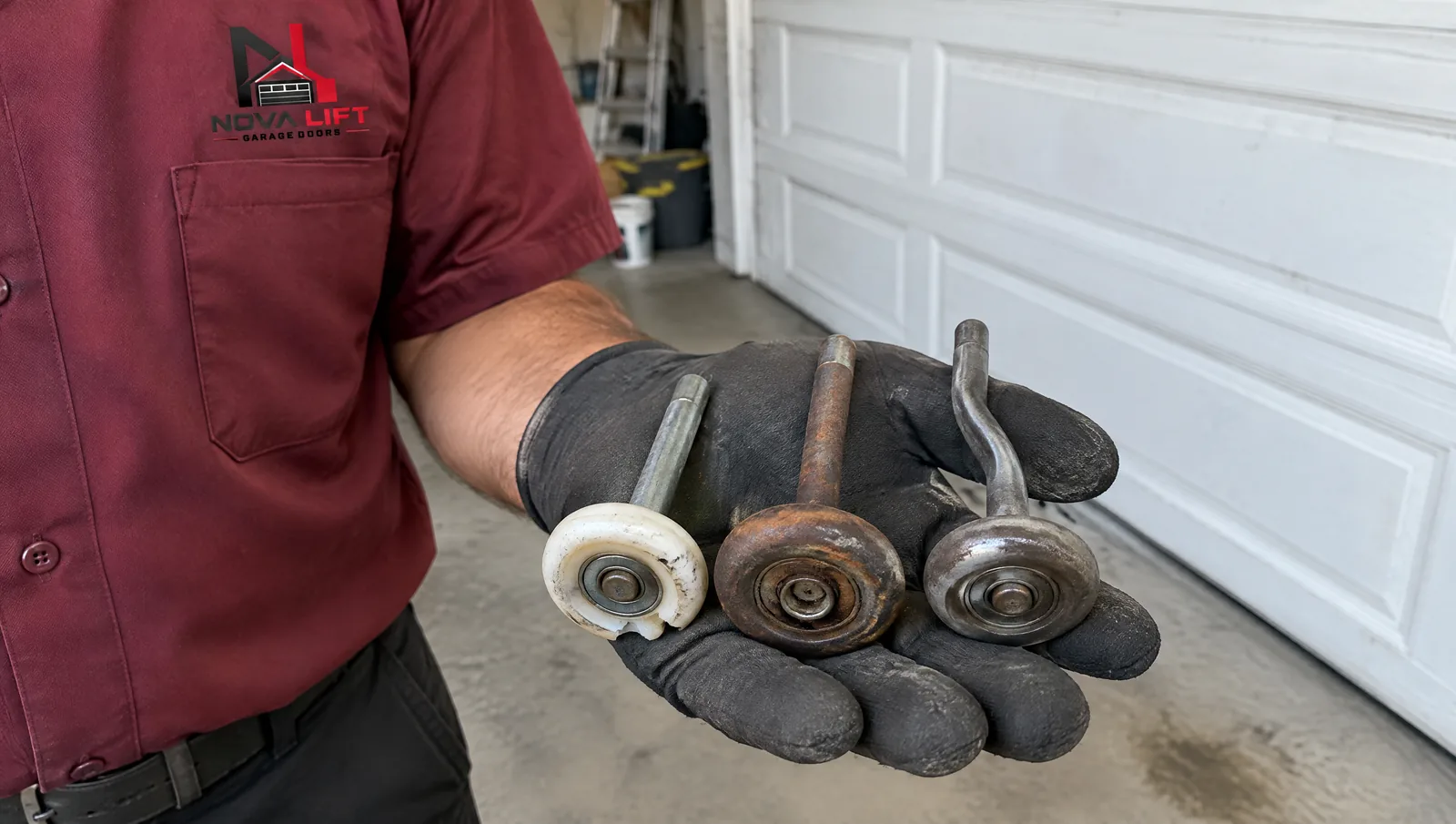
A typical sectional door has a roller at each end of every panel joint, plus one at each top and bottom corner. Each one is a wheel on a short steel stem. The stem slides into a hinge or bracket on the door, and the wheel runs inside the curved track on either side. As the door opens, the rollers carry it up the vertical track, around the bend and along the ceiling.
Because they move every time the door does, rollers wear steadily. The trouble is that the wear happens slowly enough that most people get used to the noise long before they notice anything is wrong.
Listen first
A door on good rollers makes a low, even hum as it moves. Worn rollers change that sound in ways you can learn to pick out:
- Grinding or rumbling usually means the bearings inside a steel roller have dried out or broken down.
- Squealing can come from a roller that has stopped turning and is being dragged along the track.
- Clunks or knocks at the same point every time can mean a flat spot on one wheel, or a roller catching as it rounds the curve.
Stand to one side while the door runs and listen to each track. The noise often comes mostly from one side, which narrows down where to look.
Then look closely
With the door closed and the opener unplugged, check each roller you can see. Signs of wear include:
- nylon wheels that are cracked, chipped or worn into an oval shape
- steel wheels with rust on the rim or bearings that show through
- a wheel that wobbles on its stem or sits at an angle
- stems that are bent, or that have worn a groove in the hinge
- shiny streaks inside the track where a roller has been sliding rather than rolling
Watching the door move is just as useful. A door that shakes, shudders or jerks as it travels, particularly around the curve, often has rollers that no longer turn freely.
Not all rollers are equal
The type of roller on your door affects how long it lasts and how it fails.
Steel rollers
Basic steel rollers are tough but noisy. Cheaper versions have no proper bearings, so they wear quickly and rust readily in damp air.
Nylon rollers with bearings
These have a nylon wheel around sealed ball bearings. They run much more quietly and generally outlast basic steel ones, which is why many people upgrade to them when replacing a set.
Plain nylon or plastic rollers
Rollers with no bearings at all are common on lighter doors. They are quiet when new but wear down fastest, and they are the ones most likely to crack.
Why worn rollers are more than a noise problem
A roller that sticks or wobbles pulls the door sideways as it moves. The extra friction makes the opener work harder, which strains its gears and motor. Over time it can also loosen hinges and the track brackets that hold everything to the wall.
The bigger risk is a roller climbing out of the track. A cracked wheel or a bent stem can pop free, especially at the curve, and leave a panel hanging. A door that has come off its track can bind, twist or drop, so it should never be forced. Our guide on what to do when a garage door comes off track covers the first steps. The garage door off-track repair page explains what happens in that situation and how a door is put back safely.
What homeowners can and can't do
Keeping rollers turning freely is a reasonable job for anyone. A few drops of light garage door lubricant on the bearings of steel or nylon-with-bearing rollers, every few months, keeps them quieter. Don't grease the inside of the tracks. The rollers are meant to roll there, and grease only collects dirt.
Replacing rollers is a different matter. The bottom rollers sit in the bottom brackets, and those brackets anchor the lift cables, which are under full spring tension. Loosening one can release that tension without warning. Even the middle rollers mean opening hinges on a heavy door. It is safer to leave replacement to someone with the right tools, who can also check the tracks, hinges and cables at the same time.
Humidity and older doors
Damp air speeds all of this up. In Ives Estates, the long summer wet season brings showers and thunderstorms almost every day, and that steady moisture works its way into bearings and onto steel stems. Many homes there were built in the 1980s, the area's biggest building decade, and a door of that age may still be running on its first set of rollers. The garage door repair in Ives Estates page covers the services NovaLift Garage Doors offers in the area.
If your door has started grinding, shaking or catching on the curve, call (954) 758-9013 before a roller works its way loose.