
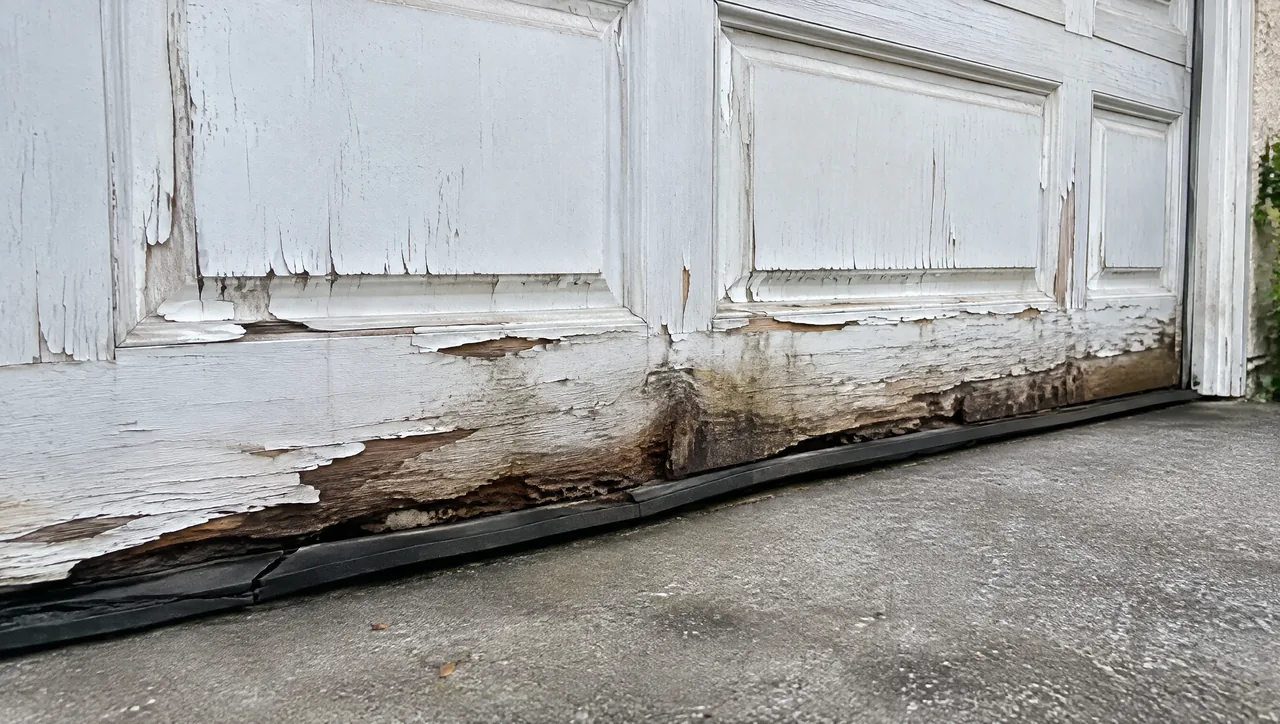
Deciding whether to repair or replace a garage door usually starts with a bad morning. A spring snaps, a cable lets go or the door lurches out of its track, and the first thought is that a door this old must be finished. That is often the wrong conclusion. A sectional door is a set of panels hung on parts that wear out on purpose, and most of those parts can be changed without touching the door itself.
The useful question is narrower. Is the thing that failed a part, or is it the door? Once you separate the two, the choice gets much easier.
Problems that are usually worth repairing
Most of the calls that make people think about a new door are hardware problems. These are normally fixed on the existing door:
- A broken spring. The door goes heavy or won't open. The spring is replaced, matched to the door's weight, and the door is rebalanced. See garage door spring repair.
- A frayed or snapped cable. One side hangs low. New cables restore the lift on both sides.
- Rollers that grind or bind. A fresh set of rollers can make an old door run smoother and quieter than it has in years.
- A door off its track. Unless the track is badly kinked, the door can usually be realigned and put back.
- An opener that has quit. The opener is a separate machine. It can be repaired or replaced while the door stays.
None of these say much about the door's panels. A spring breaking on a door is like a tire going flat on a car. It is a reason to fix the tire.
Signs the door itself has had its day
Replacement starts to make sense when the damage is in the sections, the frame of the door or its basic design. Look for these:
Panels that are bent, cracked or rusted through
A shallow dent is cosmetic. A panel that is folded, split along a seam or rusted through at the bottom edge is a structural problem, because each section has to stay stiff for the door to roll and to resist wind. On steel doors, rust that starts at the bottom of the lowest panel is common where rainwater and lawn irrigation sit against it. Once it has eaten through the skin, the panel is past saving.
Damage spread across several sections
Replacing one section is sometimes possible, but matching an older panel can be hard once a style or color is discontinued. If two or three sections are damaged, a single new section won't fix the door, and the cost of several starts to look like the cost of a new one.
The same door keeps coming back
A door that needs a different repair every few months is telling you something. When the springs, cables, rollers and hinges are all near the end of their lives at once, fixing them one at a time adds up, and the panels they hang on are just as old.
The door no longer suits the house
Some replacements have nothing to do with failure. People replace doors to get insulation in a hot garage they use as a workshop, a quieter door under a bedroom, a different look, or a door rated for the wind and debris loads of a hurricane.
A quick way to weigh it up
Before you decide, it helps to answer a few plain questions:
- Is the failure in a part (spring, cable, roller, opener, track) or in the panels?
- Are the sections straight, sound and free of rust-through?
- Does the door have an approval label showing it was rated for wind, and is it still legible?
- How many repairs has it needed in the last couple of years?
- Would you change the door anyway for insulation, noise or looks?
If the answers point to a part and sound panels, repair is usually the sensible call. If they point to the panels, repeat failures and a door you'd like to change anyway, that is when replacement earns a closer look. Our guide to what changes the price of a garage door repair explains why some repairs cost more than others.
The South Florida part of the decision
In Broward and Miami-Dade, a new garage door is treated as a building product, not just a moving panel. A replacement door normally needs a building permit, a wind-load rating suited to the opening, and a Florida or Miami-Dade product approval number. Your city's building division can tell you exactly what it asks for, and it is worth asking whoever installs the door how the permit will be handled before work starts.
Many older doors pre-date today's labels, or the label has faded or been painted over. Our article on wind-load labels on South Florida garage doors shows where to find one and how to read it. An existing door with no readable rating can still be repaired like-for-like. It just isn't the door you would choose to put back if you were starting again.
Impact-rated doors, built to resist wind-borne debris as well as pressure, cost more than standard doors. The heavier construction is the reason, and it is also why a new door usually comes with its own springs and hardware sized to its weight.
What replacing the door actually involves
A replacement is more than hanging new panels. The old door, its springs, tracks and hardware come down. The new door goes in with springs matched to its weight, new tracks set to the opening, and fresh cables and rollers, then it is balanced and tested with the opener. The door manufacturers' association, DASMA, recommends that installation be done by trained door systems technicians, mainly because of the tension stored in the spring system.
The opener may or may not need to change. A sound opener can often run a new door if its power suits the door's weight and its safety sensors work. A heavier impact-rated door may call for a stronger one. The garage door installation page covers the steps, national cost ranges and what to measure before you shop.
Older doors around Broward
Age alone doesn't decide this, but it shapes it. In Davie, the median home was built in 1989, so plenty of garages there still have doors, springs and tracks that have been working for decades. Some of those doors have years left in them after a spring or cable repair. Others are showing panel rust and repeat failures. The garage door repair in Davie page covers the repair work NovaLift Garage Doors offers there.
If you're torn between fixing the door you have and starting fresh, call (954) 758-9013. Having the door looked at first is the simplest way to tell a worn part from a worn-out door.