
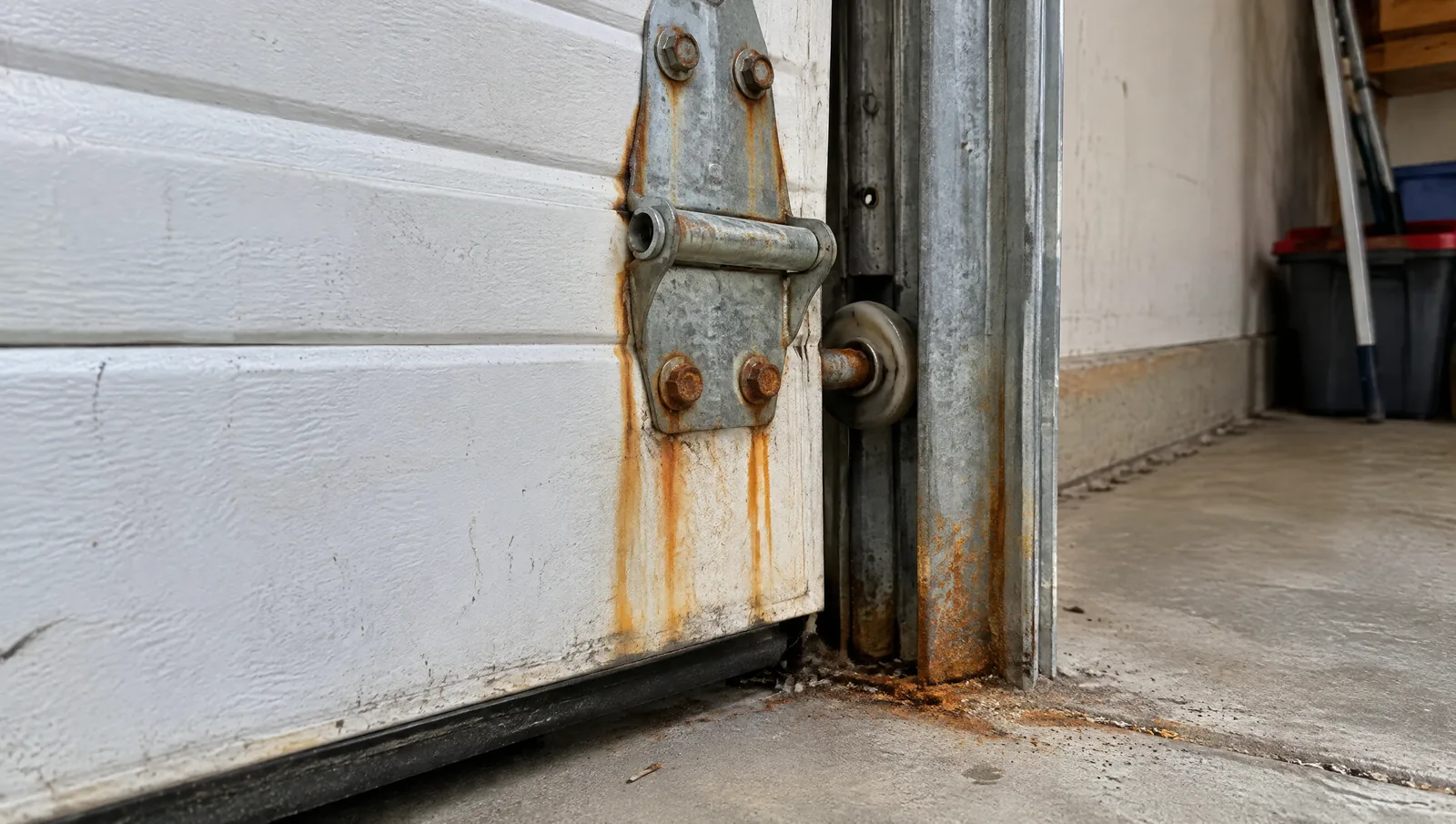
A garage door is mostly a set of steel parts working under tension. The panels get the attention, but the springs, cables, rollers, hinges and brackets do the work. In a coastal city like Dania Beach, which sits right on the Atlantic with its own public beach and fishing pier, those parts live in air that carries a little salt every day.
Salt does not damage a door overnight. It works slowly, and mostly where you don't look. Understanding how it works makes it much easier to catch.
How salt attacks steel
Wind off the ocean picks up tiny droplets of sea spray. The water evaporates and leaves fine salt crystals floating in the air, which settle on any surface they reach, including the inside of a garage each time the door opens.
Salt on its own is not the problem. The trouble is that salt pulls moisture out of humid air and holds it against the metal. That thin, salty film conducts electricity far better than plain water, so the chemical reaction that turns iron into rust runs much faster. Salt also eats through the protective zinc coating on galvanized parts. Once the zinc is gone, the steel underneath rusts like bare metal.
South Florida's long, humid summers keep that film damp for months at a time. Near the coast, the two effects add up.
The parts that suffer first
Torsion and extension springs
Most garage door springs are made from oil-tempered steel wire with little or no plating. Rust forms small pits in the surface of the wire. Every time the door cycles, the spring flexes, and those pits become the starting point for cracks. A rusty spring often breaks well before it would have worn out from use alone. Signs of a broken one are covered on our garage door spring repair page.
Lift cables
Cables are braided from many thin galvanized strands. Salty moisture gets between the strands and corrodes them from the inside, so a cable can look only a little dull while it is losing strength. Look for rust staining near the bottom brackets, where moisture tends to sit. When cables are badly corroded, cable replacement is the safe fix, not cleaning. Rust is only one way cables wear out, and our article on why lift cables fray and snap covers the others.
Rollers and hinges
Steel rollers have small ball bearings that rust and seize. A seized roller slides instead of turning, which wears the track and makes the door noisy and stiff. Hinges rust at their pins and start to bind or crack.
Fasteners and brackets
Bolts and screws that hold the track to the wall rust where they meet the bracket. Heavy rust can loosen them or make them impossible to adjust later. The bottom brackets, which sit low and catch water blown under the door, are a common weak spot.
A simple routine for coastal homes
None of this needs special tools. What it needs is a habit of looking.
- Look every few months. With a flashlight, scan the springs, cable ends, bottom brackets and hinge pins for orange or brown spots and flaking.
- Wipe, don't hose. Wipe dust and salt film off reachable hardware like hinges and track brackets with a damp cloth, then dry it. Spraying water up into the springs and drums does more harm than good.
- Keep the door closed when you can. A door left open on a breezy day lets more salty air in. Keeping it shut most of the time reduces exposure.
- Keep the bottom seal sound. A torn seal lets wind-driven rain reach the bottom brackets and the lowest rollers.
- Lubricate the right parts. A light coat of garage-door lubricant on springs, hinges and roller bearings slows corrosion. Keep it off the tracks.
Never try to scrape rust off a spring or cable, or to tighten a rusty bottom bracket. Both are under tension.
When rust means replace
Light surface rust on a hinge or a bracket can be watched. Rust that has pitted a spring, frayed a cable, or seized a roller cannot be cleaned back to full strength, and those parts are normally replaced. When parts are replaced near the coast, it is worth asking about galvanized or stainless options for hinges, rollers and fasteners where they are available for the door.
Census estimates put the median build year of Dania Beach homes at 1977. Many doors and their hardware have been replaced since then, but any older original parts that have spent decades in sea air deserve a closer look.
Our Dania Beach garage door repair page explains how NovaLift Garage Doors travels from Hollywood to help homeowners there. If you see rust on your springs or cables, call (954) 758-9013 and have the hardware checked before something lets go.