
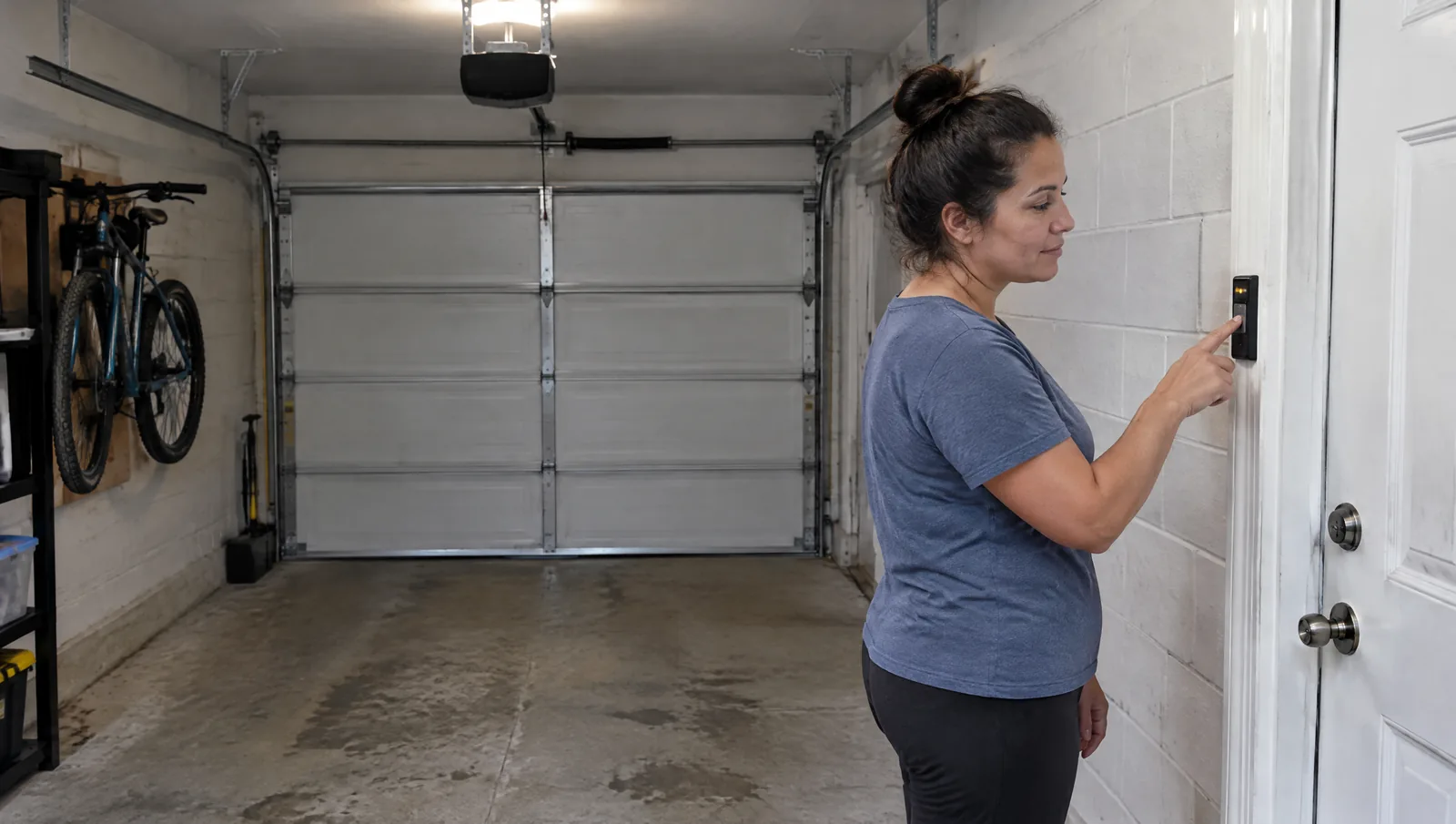
In a detached house, the garage door is mostly your own business. In a townhome or any home where the garage is built into the structure, things are more connected. Noise travels through shared walls and floors. Vibration reaches the room above. The look of the door may be set by a community, and the driveway outside might be shared. Good care starts with keeping those differences in mind.
Noise and vibration
The most common complaint about attached garages is sound. A door that rattles, squeals or bangs can be heard in a bedroom over the garage or through the wall next door, often at the hours people leave for work or come home late.
Where the noise comes from
- dry or worn rollers grinding in the tracks
- loose hinges and track bolts letting panels knock together
- an opener with a metal chain and an older motor that jolts at each end of travel
- an opener bolted straight to a ceiling joist, which passes vibration into the floor above
What usually helps
Tightening hardware and lubricating hinges, bearings and the spring is the cheapest fix. Quieter nylon rollers with sealed bearings make a noticeable difference. Where the opener itself is the problem, a belt drive with a soft-start motor runs far more quietly, and rubber isolation pads between the opener brackets and the ceiling cut down vibration. Spring work is the exception to the do-it-yourself list, because springs are under heavy tension.
Tight spaces and low ceilings
Townhome garages are often narrow single-car spaces with limited headroom. That shapes the hardware. A door may use a low-headroom track, where the curve is tighter and the rollers make a sharper turn, or a wall-mount opener that keeps the ceiling clear. These setups work well, but they are less forgiving. A worn roller or a slightly bent track is more likely to bind on a tight curve, so it pays to listen for changes in sound and deal with them early.
Storage is the other space issue. Shelves, bikes and boxes tend to creep toward the door in a small garage. Keep the area around the tracks, the springs and the safety sensors clear, and never hang anything from the door tracks or the opener rail.
Association rules
Many townhome and condominium communities have rules about exterior changes. Before replacing a door, changing its color or adding windows, read your community's governing documents or ask the association. Some require a matching style across every unit, and some need approval before work starts. Repairs that leave the outside unchanged, such as new springs, cables or rollers, are usually a simpler matter, but it is still worth knowing who is responsible for what.
In South Florida, a replacement door also has to meet local wind-load requirements, so the product chosen is about more than appearance.
Shared driveways and safety
Children and pets from several homes may play near the same row of garage doors. That makes the safety reverse more important, not less. Once a month, check that the door reverses when it touches a roll of paper towels on the floor, and that it reverses when something crosses the sensor beam. Keep remotes out of young children's reach and teach them that the door is not a toy.
Security matters too. Make sure old remotes from previous owners have been cleared from the opener's memory, and keep the keypad code to people who need it.
Salt air on the coast
Coastal communities add another layer. Sunny Isles Beach sits on a barrier island between the Atlantic and the Intracoastal Waterway, and FEMA notes that salt spray and humid air corrode metal connectors and fasteners in coastal areas. A garage door's springs, cables, rollers and track bolts are all exposed to that same air. The city is mostly high-rise condominiums with only a small share of detached houses, so a home with a garage door of its own is the exception there. Rinsing exposed hardware with fresh water now and then, and looking for rust on cables and bottom brackets, catches corrosion early. Our article on salt air and garage door hardware goes into more detail. The garage door repair in Sunny Isles Beach page lists the services NovaLift Garage Doors offers there.
A short care routine
- Every month, watch and listen to the door through a full cycle and test the safety reverse.
- Every few months, tighten loose hinge and track bolts and lubricate hinges, roller bearings and the spring.
- Twice a year, check cables and bottom brackets for rust or fraying, and look at the bottom seal.
- Before storm season, confirm the manual release works and the door closes and locks properly.
When something is beyond a routine check, such as a frayed cable, a broken spring or a door that hangs crooked, our garage door repair service covers the full door and opener. Call (954) 758-9013.